
Study at Roskilde University in Denmark: What You Need to Know
By chidx · Published 29 August 2026
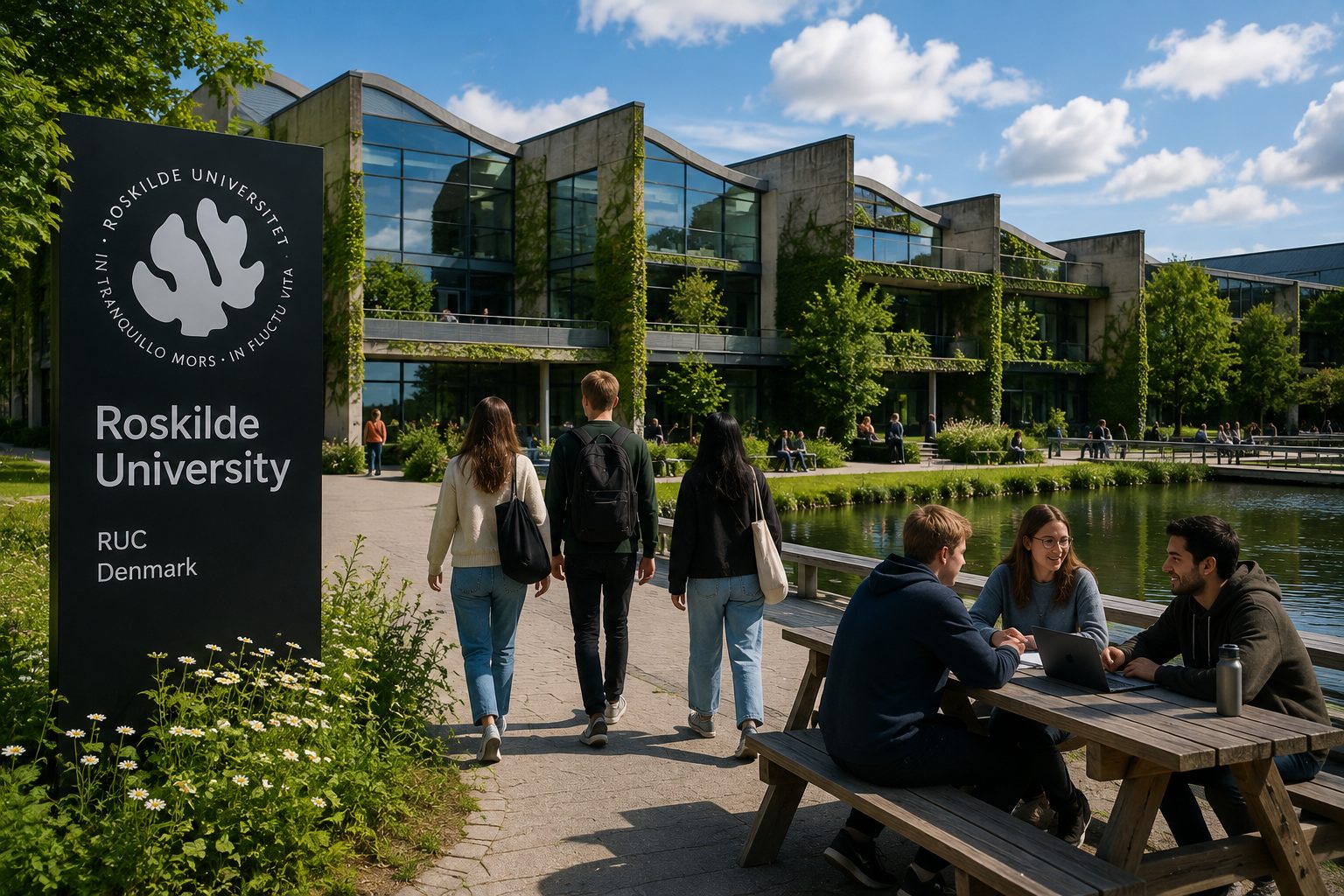
Discover how to study at Roskilde University in Denmark, including admissions, tuition, scholarships, programs, and student life.
Roskilde University isn't the first name most prospective international students associate with Denmark — that's usually Copenhagen or Aarhus. But RUC, as it's commonly known, has built a distinctive academic identity around something most universities only pay lip service to: genuinely interdisciplinary, project-based learning. If you're considering studying in Denmark and want an academic experience built around solving real problems rather than sitting through lecture after lecture, Roskilde is worth a serious look. This guide covers everything prospective students need to know — programs, tuition, scholarships, admissions, and what actually makes RUC's teaching model different.
Key Takeaways
- Roskilde University (RUC) is a medium-sized public Danish university, with an enrollment in the range of 6,000–7,000 students, officially recognized by Denmark's Ministry of Higher Education and Science.
- RUC is known for its interdisciplinary, project-based learning model, a distinctive teaching approach that emphasizes real-world problem-solving over traditional lecture-based instruction.
- International students can choose from around 14 English-taught programs — 3 at undergraduate level and 11 at graduate level — spanning Business & Management, Science, Humanities & Social Sciences, and Mass Communication & Media.
- Non-EU/EEA students pay tuition of roughly EUR 8,900–14,000 per year (approximately $10,000 USD), depending on the specific program.
- EU/EEA and Swiss citizens generally do not pay tuition fees to study in Denmark, in line with broader Danish and EU policy.
- A limited number of Danish State Scholarships offer qualifying non-EU/EEA master's students a full tuition fee waiver plus a monthly stipend of DKK 7,800 for up to 22 months.
- Most graduate programs, and several undergraduate ones, are taught entirely in English, making the university genuinely accessible to non-Danish speakers.
What Makes Roskilde University Different
Interdisciplinary, Project-Based Learning
RUC's defining academic feature is its problem-oriented, project-based approach to learning. Rather than organizing education purely around fixed disciplinary lectures, students at Roskilde regularly work in project groups to research and solve real, often interdisciplinary problems — a structure designed to build practical experience, critical thinking, and collaborative problem-solving skills alongside traditional academic knowledge.
This distinguishes RUC from many more conventionally structured Danish and European universities, and it's a genuinely important factor for prospective students to weigh: if you learn best through structured lectures and traditional assessment, RUC's model may feel unfamiliar at first. If you're drawn to applied, collaborative, self-directed academic work, it's likely to be a strong fit.
A Genuinely Interdisciplinary Academic Structure
Roskilde offers programs across a wide academic range — Humanities, Social Sciences, Natural Sciences, and Technical Sciences — and its structure actively encourages students to work across these boundaries rather than staying confined to a single discipline throughout their degree. This makes it a particularly good fit for students whose interests don't map neatly onto a single traditional department.
Programs Available to International Students
International students can choose from roughly 14 English-taught programs at Roskilde, split across two levels:
- 3 undergraduate (bachelor's) programs
- 11 graduate (master's) programs
These span four broad fields:
- Business & Management Studies
- Science
- Humanities & Social Sciences
- Mass Communication & Media
Many graduate programs, and a smaller number of undergraduate programs, are taught entirely in English, making Roskilde accessible to international students who don't speak Danish — though depending on your program and how long you plan to stay in Denmark, picking up conversational Danish alongside your studies is generally a worthwhile investment for daily life and part-time work opportunities.
Graduate programs at Roskilde generally take two years to complete, building on undergraduate foundations with a stronger emphasis on research and specialization than the bachelor's level.
Tuition Fees: What International Students Actually Pay
Tuition costs at Roskilde depend heavily on your citizenship and the specific program you choose:
- EU/EEA and Swiss citizens: Generally do not pay tuition fees to study at Danish public universities, in line with EU and Danish higher education policy — though this can depend on specific circumstances, so it's worth confirming your exact status directly with the university.
- Non-EU/EEA international students: Tuition typically ranges from roughly EUR 8,900 to EUR 14,000 per year at both undergraduate and graduate level, translating to approximately $10,000 USD annually on average, though exact fees vary meaningfully by program.
Beyond tuition, international students should budget separately for housing, utilities, transportation, books, and general living expenses, which add meaningfully to the total cost of studying in Denmark — a country with a relatively high cost of living by European standards.
Refund Policy
If a student does not begin their studies at Roskilde and requests a refund before the start of the semester (1 September or 1 February), the tuition fee is refunded. Refunds after the semester has started are generally not available, except in exceptional, documented circumstances that prevent a student from beginning their program — written documentation is required for these cases.
Scholarships and Tuition Fee Waivers
For qualifying non-EU/EEA students, Roskilde offers a genuinely valuable funding pathway:
- Danish State Scholarships: A limited number of tuition fee waivers and scholarships are available to highly talented non-EU/EEA students at the master's level who require a residence permit to study in Denmark. Recipients receive a full tuition fee waiver plus a monthly stipend of DKK 7,800 to cover living expenses, for a maximum of 22 months on programs starting in September.
- Not every master's program offers this scholarship — availability is specific to certain programs each intake year, so prospective applicants should check the current list of eligible programs for their target intake before applying.
- Erasmus Mundus Joint Master's Scholarships: For students applying to qualifying joint-degree programs involving Roskilde as a partner institution, these scholarships can offer fully funded support, including tuition, a living allowance, and visa fees.
- How to apply: Scholarship applications are typically made by uploading a motivational letter and CV outlining academic and occupational background as part of the standard online application to the relevant master's program — there's usually no separate scholarship application process.
Because scholarship availability, amounts, and eligible programs are reviewed and updated annually, always check Roskilde's official scholarship pages for the specific intake year you're applying to.
Admissions: What You'll Need
While specific requirements vary by program and degree level, prospective international applicants to Roskilde generally need:
- Academic transcripts demonstrating completion of the relevant prior qualification (secondary education for bachelor's applicants; a bachelor's degree for master's applicants)
- English language proficiency evidence, typically through IELTS, TOEFL, or an equivalent recognized test, for programs taught in English
- A motivational letter and CV, particularly for scholarship consideration alongside standard program admission
- Compliance with the specific application deadline for your intake — non-EU/EEA applicants typically face an earlier deadline (often in mid-January) than EU/EEA applicants, given the additional residence permit process involved
Given how much these specifics vary by program, prospective students should always cross-check requirements directly on Roskilde's official admissions pages for their chosen program.
Student Life and Support Services
Beyond academics, Roskilde provides a range of facilities and services aimed at supporting both Danish and international students:
- Library and campus facilities, including sports facilities
- Study abroad and exchange programs, for students interested in an international component beyond their core degree
- Housing support, helping international students navigate dormitories, shared apartments, and private rental options — a genuinely useful service given how competitive student housing markets can be in parts of Denmark
- Administrative and international student support services, geared toward helping non-Danish students navigate visas, residence permits, and general settling-in logistics
Is Roskilde University Right for You?
Roskilde is likely to be a strong fit if you:
- Are drawn to applied, project-based, collaborative learning rather than a purely lecture-and-exam academic structure
- Want a genuinely interdisciplinary education, with the flexibility to work across Humanities, Social Sciences, Natural Sciences, and Technical Sciences rather than staying confined to one department
- Are interested in Business & Management, Science, Humanities & Social Sciences, or Mass Communication & Media specifically, since these are the fields where RUC offers its English-taught international programs
- Want to study in Denmark specifically — a country known for high-quality, well-funded public education, strong student support infrastructure, and (for EU/EEA students in particular) free tuition
- Are a non-EU/EEA student seeking scholarship opportunities, given Roskilde's Danish State Scholarship program for qualifying master's students
It may be less suited to students who strongly prefer traditional, lecture-heavy academic structures, or those specifically seeking a large, internationally famous university brand — Roskilde is a solid, well-regarded institution, but it's a mid-sized university with a specific pedagogical identity rather than a globally recognized "name" university.
Frequently Asked Questions
Is Roskilde University a good choice for international students? Yes, particularly for students interested in interdisciplinary, project-based learning and Roskilde's specific academic fields — Business & Management, Science, Humanities & Social Sciences, and Mass Communication & Media. Around 14 English-taught programs are available to international applicants.
How much does it cost to study at Roskilde University? EU/EEA and Swiss citizens generally pay no tuition fees. Non-EU/EEA students typically pay between roughly EUR 8,900 and EUR 14,000 per year, depending on the program, plus living expenses.
Are there scholarships available for international students at Roskilde? Yes. Qualifying non-EU/EEA master's students can apply for Danish State Scholarships, which offer a full tuition fee waiver plus a monthly stipend of DKK 7,800 for up to 22 months, though availability is limited to specific programs each intake year.
Are programs at Roskilde University taught in English? Most graduate programs and several undergraduate programs are taught entirely in English, making the university accessible to international students who don't speak Danish.
What is Roskilde University known for academically? Its distinctive interdisciplinary, project-based learning model, which emphasizes collaborative, real-world problem-solving over traditional lecture-based instruction.
How long does a master's degree take at Roskilde University? Generally two years, building on a completed bachelor's degree with an increased emphasis on research and specialization.