
Pulling an All-Nighter: Tips, Risks, and When to Stop
By chidx · Published 28 August 2026
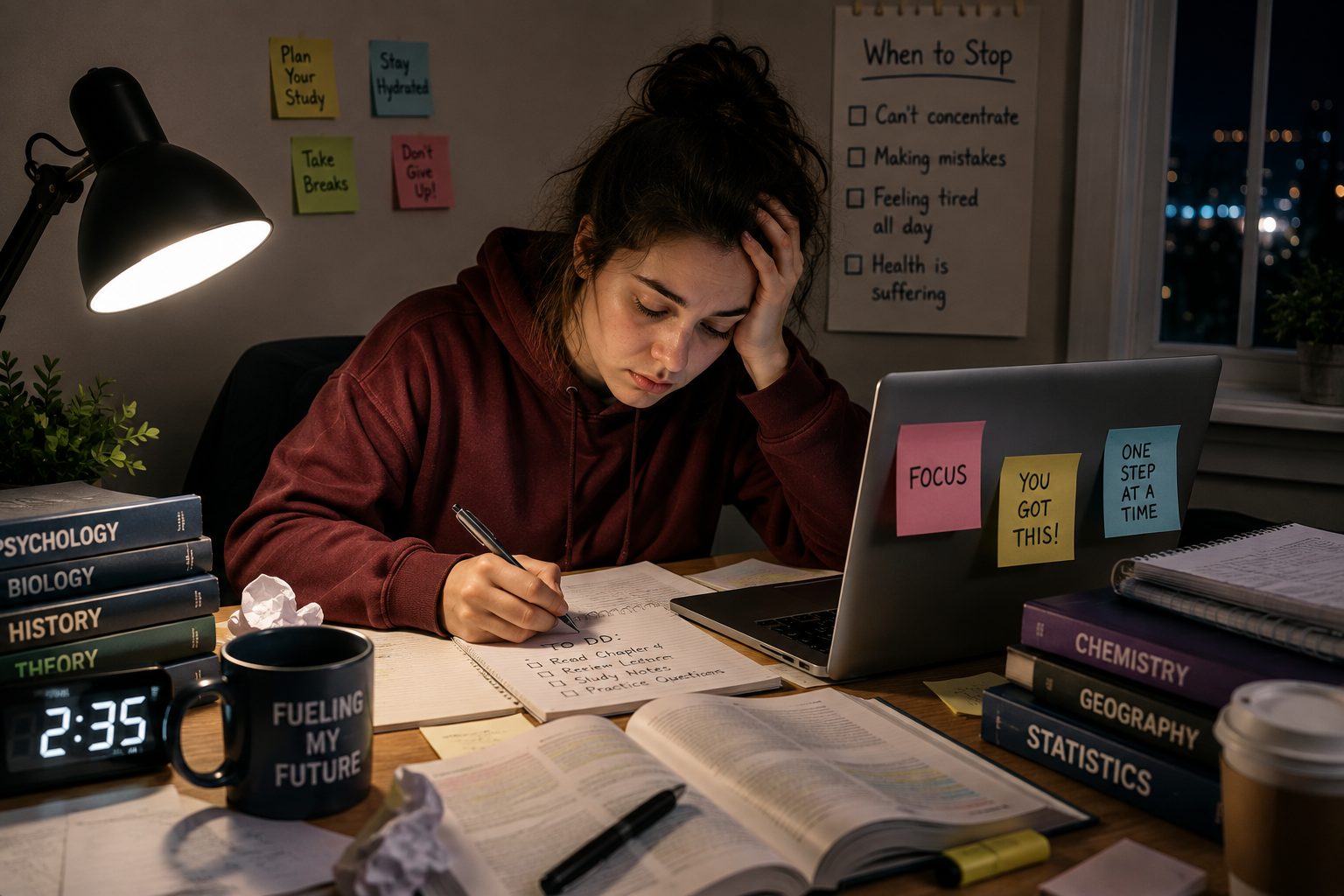
Learn the tips, risks, and warning signs of pulling an all-nighter, plus when to stop and choose rest instead.
At some point in nearly every student's academic life, the math stops working: too much material, too little time, and a deadline that isn't moving. The all-nighter starts to look like the only option. Before you commit to one, it's worth understanding what actually happens to your brain and body when you skip sleep entirely — because the honest answer is that an all-nighter is far less effective, and far riskier, than it feels in the moment. Here's what you need to know, along with what actually works better.
What Actually Happens to Your Brain When You Skip Sleep
Sleep isn't downtime for your brain — it's when your brain does critical work you can't do while awake, including consolidating memory and clearing out cellular waste products that build up during the day. Pulling an all-nighter interrupts this process entirely, and the effects show up fast:
- Memory consolidation stalls. Sleep is when short-term memories from your day get converted into longer-term storage. Studying all night without sleep means much of what you crammed in the final hours may not actually "stick" the way it would if you'd slept on it.
- Cognitive performance drops sharply. Research on sleep deprivation has found that staying awake for roughly 24 hours produces cognitive impairment comparable to a blood alcohol concentration of about 0.10% — above the legal driving limit in most places. Reaction time, decision-making, and working memory all suffer measurably.
- Emotional regulation weakens. Sleep-deprived people are more prone to irritability, anxiety, and impulsive decision-making — not ideal conditions heading into a high-stakes exam or presentation.
- Attention and focus become unreliable. Microsleeps — brief, involuntary lapses into sleep lasting a few seconds — become more likely the longer you stay awake, even if you don't notice them happening.
The uncomfortable truth: the very cognitive functions you need most for a test or presentation — memory recall, focus, and clear thinking — are exactly the ones sleep deprivation damages first.
Does Cramming All Night Actually Work?
Generally, no — at least not as well as it feels like it should in the moment. Research on sleep and learning consistently shows that studying followed by a full night's sleep produces significantly better retention than studying through the night without sleep. Students who pull all-nighters before exams tend to perform worse, on average, than students with comparable preparation time who slept normally — even though the all-nighter group spent more total hours "studying."
There's also a subjective trap worth knowing about: sleep deprivation tends to make you feel more confident in your performance than you actually are. Studies on sleep-deprived cognitive performance have repeatedly found that people underestimate how impaired they've become — meaning you may walk into an exam after an all-nighter feeling reasonably sharp while actually performing well below your normal capacity.
If You're Going to Pull One Anyway: Harm-Reduction Tips
Sometimes, despite knowing the risks, an all-nighter is unavoidable — a deadline genuinely can't move, or circumstances outside your control have eaten your preparation time. If you're in that position, here's how to minimize the damage:
Before You Start
- Eat a real meal beforehand, with protein and complex carbohydrates rather than sugar, which will cause an energy crash partway through the night.
- Hydrate well, since dehydration compounds fatigue and makes concentration even harder.
- Plan your session with breaks built in — working in focused blocks (such as 45–50 minutes on, 10–15 minutes off) is more sustainable than trying to push straight through for hours.
During the Night
- Prioritize ruthlessly. With impaired cognitive function working against you, focus on the highest-value material first — the material most likely to appear on the exam or matter most for the assignment — rather than trying to cover everything.
- Keep moving periodically. Short bursts of physical movement (a walk around the room, some stretching) help combat the natural dip in alertness that comes with prolonged sitting and fatigue.
- Be strategic with caffeine, not constant. A steady drip of caffeine throughout the night tends to work better than one large dose, but caffeine has a half-life of roughly 5–6 hours — consuming it too close to when you actually need to perform (like right before an exam) can leave you jittery rather than sharp. Stop caffeine intake several hours before you need to be at your calmest and most focused.
- Use bright light strategically. Bright light (natural daylight if possible, or a bright lamp) helps suppress melatonin production and can support alertness — dim lighting will work against you.
- Avoid heavy, high-fat foods, which divert blood flow toward digestion and can make you feel more sluggish, not less.
If You Have Any Flexibility at All
- A short nap is far better than none. Even a 20–30 minute nap can meaningfully restore some alertness and cognitive function — though be cautious about naps longer than 30 minutes, since waking from deeper sleep stages can leave you groggier than before ("sleep inertia").
- Consider a partial night instead of a full all-nighter. If you can get even 3–4 hours of actual sleep, even broken up, your cognitive performance the next day will typically be meaningfully better than with zero sleep at all.
Real Risks You Should Actually Weigh
Beyond reduced exam performance, sleep deprivation carries risks that are easy to underestimate in the moment:
- Driving or operating machinery while sleep-deprived is genuinely dangerous. The cognitive impairment from 24 hours of sleep loss is comparable to legal alcohol intoxication limits in many countries — never drive after pulling an all-nighter, even if you feel alert.
- Immune function takes a measurable hit. Even one night of significant sleep loss can reduce immune response, which matters particularly during high-stress academic periods (like exam season) when you're already more vulnerable to illness.
- Mood and mental health effects compound with repeated sleep loss. A single all-nighter's effects generally resolve after you catch up on sleep, but repeated sleep deprivation — a common pattern during exam periods — is associated with worsened anxiety, low mood, and reduced stress resilience over time.
- "Sleep debt" doesn't fully repay with a single long sleep. While one good night's sleep helps, research suggests that accumulated sleep deprivation isn't perfectly reversed by a single catch-up sleep session — cognitive effects can linger longer than people expect.
When to Stop and Choose Sleep Instead
There are specific situations where pulling an all-nighter is a genuinely bad trade, even under deadline pressure:
- If you'll need to drive, operate machinery, or make safety-critical decisions afterward. The impairment is real and comparable to legal intoxication limits — this isn't a risk worth taking for any deadline.
- If the task genuinely requires creative thinking, complex problem-solving, or nuanced judgment, rather than rote recall. Sleep deprivation disproportionately damages exactly these higher-order cognitive functions.
- If you're already sleep-deprived from previous nights. Stacking a second or third all-nighter onto existing sleep debt compounds impairment considerably more than an isolated one-off night.
- If you have an existing health condition — including anxiety, depression, epilepsy, or cardiovascular issues — where sleep deprivation is known to worsen symptoms. Check with a healthcare provider if you're unsure whether this applies to you.
- If a partial night's sleep is genuinely achievable instead. If you can realistically get even 3-4 hours by adjusting your plan, this is very likely to produce better results than zero sleep, both for your performance and your wellbeing.
A Better Long-Term Strategy: Avoiding the All-Nighter Altogether
The most effective solution to the all-nighter problem is preventing the situation that makes one feel necessary in the first place:
- Spaced repetition beats cramming. Research consistently shows that studying material across multiple shorter sessions over days or weeks produces significantly better retention than compressing the same total study time into one long session.
- Break large deadlines into smaller milestones early, rather than letting a single large task loom until the final days.
- Protect a consistent sleep schedule during exam or deadline periods specifically, rather than treating sleep as the first thing to sacrifice when time gets tight — your actual cognitive performance depends on it more than most students initially assume.
- If all-nighters are becoming a recurring pattern rather than a rare emergency, it's worth honestly examining your time management and workload — repeated sleep deprivation has real costs to both academic performance and overall wellbeing, and addressing the underlying pattern will serve you better long-term than repeatedly treating the symptom.
Frequently Asked Questions
Is one all-nighter really that bad for you? An isolated all-nighter is generally not dangerous to your long-term health, but it does meaningfully impair memory, focus, and decision-making the following day — and its cognitive effects are comparable to legal alcohol intoxication limits in some measures, which matters significantly for anything requiring sharp thinking or safety (like driving).
Does pulling an all-nighter actually help me remember more material? Generally, no. Sleep plays a critical role in converting short-term memory into long-term storage — studying followed by a full night's sleep tends to produce better retention than studying through the night without sleep, even though the all-nighter can feel more productive in the moment.
How much caffeine is too much during an all-nighter? This varies by individual tolerance, but timing matters as much as total amount — caffeine has a roughly 5–6 hour half-life, so consuming it too close to when you need to perform (like right before an exam) can leave you jittery rather than genuinely alert. Spacing smaller doses throughout the night tends to work better than one large dose.
Is a short nap better than staying awake all night? If you have any flexibility, yes — even a 20–30 minute nap can meaningfully restore alertness and cognitive function, and getting even 3–4 hours of broken sleep is generally significantly better for next-day performance than zero sleep at all.
Is it safe to drive after an all-nighter? No — cognitive impairment from roughly 24 hours of sleep loss is comparable to legal alcohol intoxication limits in many places. Avoid driving or operating machinery after pulling an all-nighter, even if you feel alert.
How can I avoid needing all-nighters in the first place? Spaced repetition (studying in shorter sessions across multiple days rather than cramming) is consistently shown to produce better retention than last-minute cramming, and breaking large deadlines into smaller milestones early tends to prevent the kind of time crunch that makes an all-nighter feel necessary in the first place.