
Duolingo English Test Preparation: Tips for Success
By chidx · Published 26 August 2026
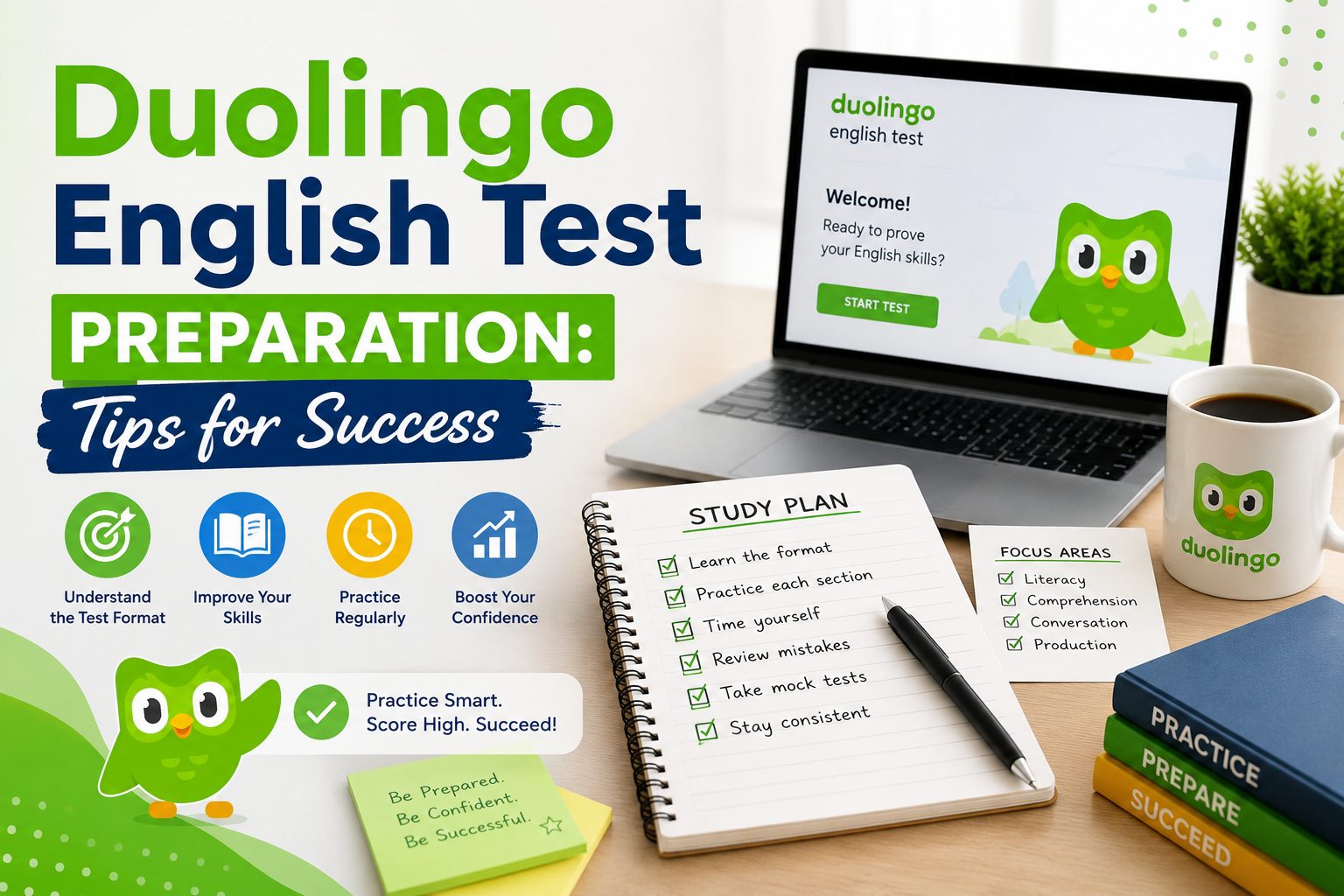
Duolingo English Test Preparation: Get expert tips, practice strategies, and advice to achieve your target score.
The Duolingo English Test (DET) has become one of the most popular English proficiency exams for students applying to study abroad — and for good reason. It's fast, affordable, fully online, and now accepted by more than 4,000 universities and institutions worldwide. But its unique adaptive format means that traditional IELTS or TOEFL prep strategies don't always translate directly.
This guide breaks down exactly how the DET works and shares practical, effective strategies to help you prepare and perform at your best.
What Is the Duolingo English Test?
The DET is a 60-minute, fully online English proficiency exam that candidates can take from home using a computer, webcam, and stable internet connection — no test center required. Because of its adaptive format, the DET is significantly shorter than traditional English proficiency exams while still providing a reliable measure of a candidate's overall English ability.
Key facts about the test:
- Cost: Around $59 USD (roughly ?4,890 in India), making it considerably cheaper than IELTS, TOEFL, or PTE
- Duration: About 60 minutes total
- Results: Typically available within 48 hours
- Score range: 10 to 160, with subscores for literacy, comprehension, conversation, and production
- Eligibility: No age limit or prerequisites required
- Format: No traditional multiple-choice questions — instead, task-based questions requiring typing, speaking, and listening
Understanding the DET Format
The DET is built around an adaptive testing engine: the difficulty of each question adjusts in real time based on how you perform. Answer a question correctly, and the next one gets harder; answer incorrectly, and the next one gets easier. This is what allows the test to accurately pinpoint your proficiency level in a fraction of the time required by other exams.
The exam is generally organized into a few key components:
A brief introduction section. Before the timed test begins, you'll get a few minutes to review your test and profile details, read the test rules, and check your camera, microphone, and internet connection. This section isn't scored, but skipping careful setup here can cause technical issues later, so it's worth taking seriously.
The adaptive test. This is the core of the exam and includes a mix of task types that assess reading, writing, listening, and speaking in an integrated way — rather than as separate sections like in IELTS or TOEFL. Common question types include:
- Read and Select: Identifying which words in a list are real English words versus invented ones, testing vocabulary recognition and reading speed
- Read and Complete: Typing in missing letters within sentences, testing spelling and contextual vocabulary
- Listen and Type: Typing exactly what you hear in short audio clips
- Additional tasks covering interactive reading comprehension, short spoken responses, and sentence-building
The writing and speaking sample. Toward the end of the test, you'll complete open-ended writing and speaking tasks, such as responding to a written prompt or describing an image aloud. This section isn't part of the adaptive scoring engine but is reviewed to assess your genuine fluency, clarity, and communication skills — and can also be shared directly with universities alongside your score.
Because the format has been refined over time — including updates to how certain tasks contribute to subscores — it's worth reviewing Duolingo's official test format page shortly before your test date to confirm you're preparing for the current version.
How the DET Is Scored
Your overall score falls between 10 and 160, and is broken down into four subscores:
- Literacy — your ability to read and write
- Comprehension — your ability to listen and read together
- Conversation — your ability to listen and speak
- Production — your ability to write and speak
Universities may look at your overall score, your subscores, or both, depending on their specific admissions requirements. It's worth checking your target university's minimum score requirements for both the overall score and any subscore thresholds before you begin preparing, since some programs set minimums for specific skill areas.
How to Prepare for the Duolingo English Test
1. Take the Official Practice Test First
Before diving into general English practice, take Duolingo's official practice test. This gives you a realistic baseline score and, more importantly, familiarizes you with the test interface, timing, and question formats — which matters more on the DET than on many other exams, since its adaptive, task-based structure is unlike traditional multiple-choice tests.
2. Build Genuine English Proficiency — Not Just Test Familiarity
It's tempting to focus purely on learning question formats and tricks, but simply familiarizing yourself with question types isn't enough to guarantee a strong score. Because the DET adapts to your actual skill level in real time, building genuine reading, writing, listening, and speaking ability through consistent practice produces far better results than relying on test-taking shortcuts alone.
Effective ways to build real proficiency include:
- Reading English-language news articles, essays, and books daily
- Watching English-language shows, podcasts, or lectures with and without subtitles
- Practicing writing short essays and getting feedback from a teacher, tutor, or language exchange partner
- Speaking English regularly, even informally, to build fluency and reduce hesitation
3. Practice Typing Speed and Accuracy
Because the DET is entirely computer-based and includes tasks like Listen and Type and Read and Complete, typing speed and accuracy directly affect your ability to complete tasks within the time given. If you're not used to typing in English regularly, spend time practicing — slow or inaccurate typing can cost you points even when your language comprehension is strong.
4. Master Vocabulary Recognition
Question types like Read and Select test your ability to quickly distinguish real English words from invented ones. This rewards broad vocabulary exposure rather than memorizing word lists in isolation. Reading widely — across different topics, tones, and formality levels — helps build the kind of intuitive word recognition this task type rewards.
5. Practice Speaking and Writing Under Time Pressure
The open-ended writing and speaking sample section requires you to respond to prompts clearly and coherently within a set time limit. Practice this specifically:
- Set a timer and practice writing short responses (100–150 words) to random prompts
- Record yourself speaking for 60–90 seconds on a topic without preparation, then listen back and evaluate your clarity and pacing
- Focus on organizing your thoughts quickly — a clear, well-structured response matters more than trying to sound overly complex
6. Simulate Real Test Conditions
Because the DET is taken at home rather than in a test center, distractions and technical issues are real risks that can affect your performance. Before your actual test:
- Test your webcam, microphone, and internet connection well in advance
- Choose a quiet, well-lit, distraction-free room
- Let household members know not to interrupt you during the test window
- Practice a full-length mock test in the same environment you'll use for the real exam
7. Read the Rules and Requirements Carefully
The DET has strict monitoring and integrity requirements, since it's proctored remotely via AI and human review. Before test day, carefully review Duolingo's official testing rules — covering things like permitted materials, room requirements, and behavior during the test — to avoid any accidental rule violations that could affect your results.
8. Review Your Target Score Requirements Early
Different universities set different minimum DET score requirements, and some also require minimum subscores in specific areas like writing or speaking. Research your target institutions' requirements before you begin preparing, so you can focus your practice on the specific skill areas that matter most for your applications.
Common Mistakes to Avoid
- Underestimating the adaptive format. Because difficulty increases with correct answers, going in without genuine preparation can lead to a lower score than expected, even for confident English speakers.
- Ignoring the writing and speaking sample. Since this section isn't part of the core adaptive score but is still reviewed by universities, treating it as an afterthought can undermine an otherwise strong application.
- Skipping the practice test. The DET's format is different enough from IELTS, TOEFL, and PTE that walking in unfamiliar with the interface can cost valuable time and confidence on test day.
- Neglecting technical setup. A poor internet connection, malfunctioning webcam, or noisy environment can disrupt your test or even affect your eligibility for a valid score.
- Cramming instead of building real skills. Because the test is designed to measure authentic proficiency, last-minute cramming on formats alone tends to produce weaker results than sustained, genuine practice.
Final Thoughts
The Duolingo English Test offers a faster, more affordable, and more flexible path to proving your English proficiency than traditional exams — but its unique adaptive format means preparation still matters. Success comes down to combining genuine language proficiency with familiarity around the test's specific format, timing, and task types.
Start by taking an official practice test to establish your baseline, then build a consistent study routine that strengthens your real reading, writing, listening, and speaking skills. Combine that with focused practice on typing speed, timed responses, and test-day logistics, and you'll be well positioned to earn a score that reflects your true English ability.