
Cost of Living in Scotland for International Students
By chidx · Published 27 August 2026
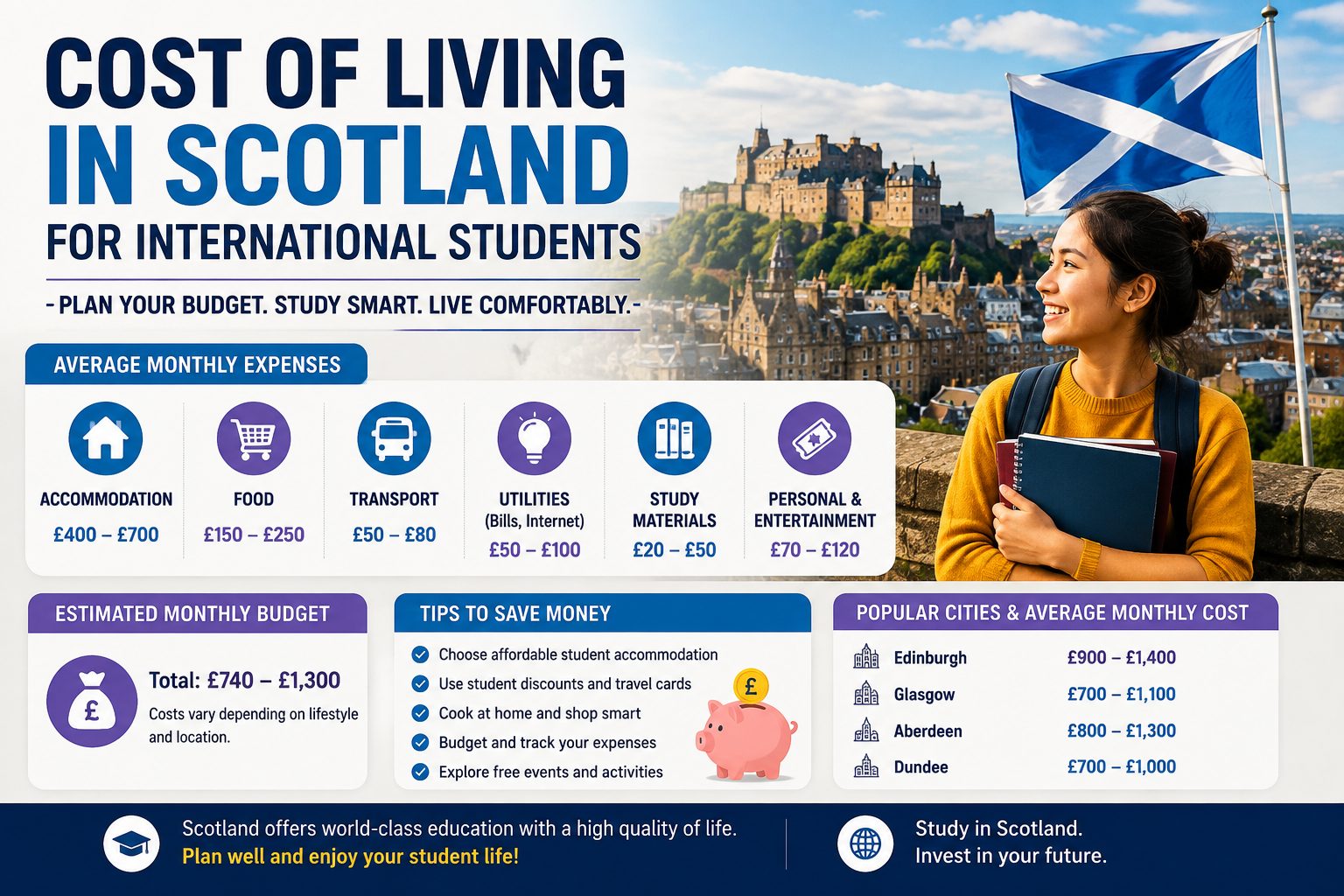
Discover the cost of living in Scotland for international students, including rent, food, transport and budgeting tips.
Scotland has become one of the most popular study destinations in the UK, drawing around 73,000 international students each year to its 19 universities. Alongside world-class institutions like the University of Edinburgh, University of Glasgow, and University of St Andrews, one of Scotland's biggest draws is affordability — living costs here are noticeably lower than in London and much of the rest of England.
This guide breaks down exactly what you can expect to spend as an international student in Scotland, from rent and groceries to transport and healthcare, so you can budget with confidence before you arrive.
Overview: How Much Does It Cost to Live in Scotland as a Student?
Estimates vary depending on the source and lifestyle, but most guidance points to a similar range. General cost-of-living estimates for Scotland put the typical monthly budget between roughly £900 and £1,700, depending on the city, accommodation type, and personal spending habits. The University of Glasgow advises students to budget for a maximum of £1,700 a month, including rent, while other institutions suggest figures closer to £900–£1,400 per month covering rent, bills, food, transport, and socializing.
For UK student visa purposes, the UK Visa and Immigration (UKVI) maintenance requirement currently recommends a minimum of £1,171 per month to demonstrate you can financially support yourself — a useful baseline figure, even though many students in Scotland manage on this amount or spend somewhat more depending on their city and lifestyle.
Cost of Living by City
Where you choose to study in Scotland has a significant impact on your monthly budget. Here's how the major student cities compare.
Glasgow
Glasgow is widely considered one of the more affordable major cities in Scotland. Overall living costs for students in Glasgow typically range from £900 to £1,450 per month, covering accommodation, food, transportation, and social activities — a cost that runs roughly 20% lower than London. Budget-conscious students living in areas like Dennistoun can often manage comfortably on £900–£1,100 per month, while those seeking a more premium experience in areas like the West End should expect closer to £1,450–£1,700+ per month.
Edinburgh
As Scotland's capital and one of its most popular student cities, Edinburgh tends to be pricier than Glasgow. A tight housing market in Edinburgh can push rents 15–25% higher than in Glasgow, making it one of the more expensive Scottish cities for students, though still considerably cheaper than London.
Dundee, Aberdeen, and Stirling
Smaller university cities like Dundee, Aberdeen, and Stirling generally offer some of the most budget-friendly options in Scotland. With lower rental markets and fewer of the premium pricing pressures found in Glasgow and Edinburgh, these cities are worth strong consideration for students prioritizing affordability.
Breaking Down Monthly Student Expenses
Accommodation
Housing is typically the single largest expense for international students in Scotland. Costs vary significantly based on whether you choose university halls or private rentals.
- University halls (student halls): Most first-year students opt for university-provided accommodation as an easy way to settle in and meet other students.
- Shared private accommodation: A single room in a shared apartment for 3–8 students generally costs between £100 and £250 per week, typically including utility bills, internet, and insurance.
- Studio or private flats: Premium private studio accommodation, especially in popular areas, can push monthly costs considerably higher — often £1,450 or more in cities like Glasgow.
Tip: Purpose-built student accommodation is often a strong first option for international students, since it typically includes bills and is designed with student budgets and safety in mind.
Food and Groceries
Grocery costs in Scotland are generally comparable to the rest of the UK, with reasonable options available at major supermarkets like Aldi, Lidl, Tesco, and Asda. Students who cook at home and shop at budget supermarkets can typically keep food costs modest, while eating out regularly or relying on takeaways will noticeably increase monthly spending.
Transportation
Public transportation in Scottish cities is generally efficient and student-friendly, with most universities and transit providers offering discounted student rates on buses and trains. Many students also choose to walk or cycle for shorter journeys, particularly in compact cities like Stirling and Dundee, which further reduces monthly transport costs.
Utilities and Internet
If you're renting privately rather than in accommodation with bills included, expect to budget separately for electricity, heating, water, and internet. Scotland's colder climate — especially through the winter months — means heating costs can be a meaningful part of your monthly budget, particularly in older buildings.
Healthcare
International students on a UK student visa for a course lasting six months or longer are generally required to pay the Immigration Health Surcharge (IHS) as part of their visa application, which then grants access to National Health Service (NHS) care during their studies. This is usually paid upfront as part of the visa process rather than as an ongoing monthly cost.
Tuition Fees: What to Expect
While this guide focuses primarily on living costs, tuition is a major part of your overall budget in Scotland. International students can generally expect:
- Undergraduate programs: approximately £12,000–£20,000 per year
- Postgraduate taught programs: approximately £13,000–£22,000 per year
Fees vary by university and course, with subjects like medicine and veterinary medicine typically priced significantly higher than the general range. One cost advantage worth noting: many Scottish master's programs run for just one year, which can meaningfully reduce your total investment compared to two-year programs elsewhere.
How Scotland Compares to Other UK Study Destinations
Scotland is consistently positioned as one of the more affordable places to study within the UK. For comparison, London-based students should generally expect higher living costs of between roughly £1,264 and £2,118 per month — a notably wider and higher range than what students typically budget for in Scotland.
This cost advantage, combined with Scotland's strong academic reputation and shorter one-year master's options, is a major reason so many international students choose Scottish universities over their counterparts in England.
Practical Tips to Reduce Living Costs in Scotland
- Choose your city carefully. If affordability is a top priority, consider Glasgow, Dundee, Aberdeen, or Stirling over Edinburgh.
- Opt for purpose-built student accommodation where bills are included, to simplify budgeting and often reduce overall costs.
- Cook at home regularly and shop at budget supermarkets rather than relying on takeaways or dining out.
- Take advantage of student discounts on transport, entertainment, and everyday purchases — most cities offer a wide range through student ID cards.
- Apply for scholarships early. All universities in Scotland offer scholarships for international students, ranging from partial tuition subsidies to full living allowances, so it's worth researching options well before you commit to a program.
- Budget for seasonal costs. Factor in higher heating expenses during Scotland's colder months, particularly if you're in older or private accommodation.
Final Thoughts
Scotland offers a compelling combination of world-class education and genuinely manageable living costs, especially compared to London and other major global study destinations. While your exact monthly budget will depend heavily on your chosen city, accommodation type, and lifestyle, most international students can expect to spend somewhere between £900 and £1,700 per month to live comfortably.
By choosing your city thoughtfully, opting for cost-effective accommodation, and taking advantage of student discounts and scholarships, it's entirely possible to study in Scotland without breaking the bank — making it one of the most cost-effective English-speaking study destinations available today.