
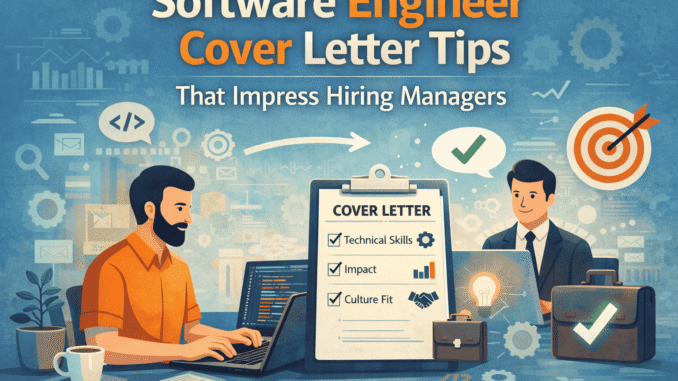
This guide is designed for entry-level, mid-level, and senior software engineers, career switchers, and international applicants who want proven Tips to Impress Hiring Managers in today’s competitive tech job market. It combines practical advice, insights into the psychology of hiring managers, real-world examples, and actionable templates to help you stand out and secure interviews faster.
Table of Contents
-
Introduction
-
Why Hiring Managers Still Care About Cover Letters
-
The Psychology of Hiring Managers Reading Cover Letters
-
What Hiring Managers Look for in a Software Engineer Cover Letter
-
Cover Letter vs Resume: What Impresses More?
-
When a Cover Letter Matters the Most
-
Before You Write: Preparation That Sets You Apart
-
Researching the Company Like a Hiring Manager
-
Understanding the Job Description at a Deeper Level
-
Identifying Your Core Value as a Software Engineer
-
Structuring a Software Engineer Cover Letter That Works
-
Writing an Opening That Instantly Impresses
-
Crafting a Strong Personal Pitch
-
How to Talk About Technical Skills Without Sounding Generic
-
Showing Impact Instead of Listing Technologies
-
Using Metrics and Results Hiring Managers Love
-
Explaining Complex Projects Clearly
-
Balancing Technical Depth and Readability
-
Highlighting Soft Skills That Matter in Engineering Teams
-
Demonstrating Culture Fit Authentically
-
Telling Your Career Story with Confidence
-
Addressing Employment Gaps or Job Changes
-
Writing for Entry-Level and Graduate Roles
-
Writing for Mid-Level Software Engineers
-
Writing for Senior and Lead Engineers
-
Writing a Cover Letter as a Career Switcher
-
Writing for Remote and International Roles
-
Customizing Your Cover Letter for Each Application
-
Keywords, ATS, and SEO for Cover Letters
-
Common Cover Letter Mistakes Hiring Managers Reject
-
Tone, Length, and Formatting Best Practices
-
Proofreading Like a Professional
-
Using AI Tools Without Sounding Robotic
-
Real Software Engineer Cover Letter Examples
-
What Hiring Managers Say About Great Cover Letters
-
Final Checklist Before You Submit
-
Conclusion
‘1. Introduction
A well-written cover letter can be the difference between getting ignored and getting invited to interview—especially in competitive tech roles. One of the most effective Tips to Impress Hiring Managers is knowing how to use your cover letter strategically, not as an afterthought. While many software engineers rely heavily on resumes, portfolios, and GitHub profiles, hiring managers consistently report that a strong cover letter can dramatically improve a candidate’s chances.
A Software Engineer Cover Letter is not a formality; it is a strategic document that communicates your value, mindset, and professional fit in ways a resume simply cannot. It explains why your experience matters, how you solve problems, and what you bring beyond writing code.
In a job market where hundreds of qualified engineers may apply for a single role, hiring managers are not just looking for someone who can code—they are looking for someone who understands impact, collaboration, and business goals. This article shares practical, proven Tips to Impress Hiring Managers and shows you how to write a Software Engineer Cover Letter that stands out and positions you as a top candidate.
2. Why Hiring Managers Still Care About Cover Letters
Despite claims that cover letters are outdated, many hiring managers still value them — especially in software engineering roles that require:
-
Strong communication
-
Collaboration across teams
-
Problem-solving beyond coding
-
Leadership or ownership
-
Client or stakeholder interaction
Hiring managers often use cover letters to:
-
Filter serious candidates from mass applicants
-
Assess communication skills
-
Understand motivation and intent
-
Evaluate alignment with company values
-
Identify engineers who think beyond tasks
A thoughtful Software Engineer Cover Letter signals professionalism, attention to detail, and genuine interest — all qualities hiring managers respect.
3. The Psychology of Hiring Managers Reading Cover Letters
Understanding how hiring managers think helps you write better.
Most hiring managers:
-
Read cover letters quickly (10–30 seconds initially)
-
Scan for relevance, not perfection
-
Look for confidence without arrogance
-
Want clarity, not buzzwords
-
Value authenticity over templates
They ask subconsciously:
-
Does this person understand what we need?
-
Can they explain technical ideas clearly?
-
Would I enjoy working with them?
-
Do they take initiative?
Your cover letter should answer these questions without explicitly stating them.
4. What Hiring Managers Look for in a Software Engineer Cover Letter
A cover letter that impresses hiring managers typically includes:
-
Clear role alignment
-
Evidence of real-world impact
-
Thoughtful technical insight
-
Strong communication skills
-
Cultural and team awareness
-
Genuine interest in the company
Hiring managers are not impressed by long lists of technologies or vague claims like “I am passionate about coding.”
They are impressed by clarity, relevance, and outcomes.
5. Cover Letter vs Resume: What Impresses More?
A resume shows what you did.
A cover letter explains why it matters.
| Resume | Cover Letter |
|---|---|
| Skills & experience | Motivation & reasoning |
| Bullet points | Narrative |
| Facts | Context |
| Technical focus | Human + technical |
A strong Software Engineer Cover Letter turns resume data into a compelling story.
6. When a Cover Letter Matters the Most
Cover letters matter most when:
-
The role is competitive
-
You are switching careers
-
You lack direct experience
-
You’re applying remotely
-
You’re applying internationally
-
You want to stand out from similar candidates
In these cases, a cover letter can bridge gaps and reframe your experience positively.
7. Before You Write: Preparation That Sets You Apart
Impressive cover letters start before writing.
Do this first:
-
Read the job description carefully
-
Research the company’s product and mission
-
Identify required and preferred skills
-
Note repeated keywords
-
Understand the team’s challenges
Preparation allows you to write with intention rather than guesswork.
8. Researching the Company Like a Hiring Manager
Hiring managers notice when candidates have done their homework.
Research:
-
Company website
-
Engineering blog
-
GitHub repositories
-
Tech stack mentions
-
Product updates
-
Company values
Then reference them naturally in your Software Engineer Cover Letter.
Example:
“I was particularly interested in your recent migration to cloud-native architecture, as I led a similar transition at my current role.”
9. Understanding the Job Description at a Deeper Level
Job descriptions reveal priorities.
Look for:
-
Repeated skills
-
Emphasis on collaboration
-
Business goals
-
Team size and structure
Translate requirements into problems they want solved, then show how you solve them.
10. Identifying Your Core Value as a Software Engineer
Ask yourself:
-
What problems do I solve best?
-
What impact have I delivered?
-
What makes my experience unique?
Your cover letter should center around one clear value proposition, not everything you’ve ever done.
11. Structuring a Software Engineer Cover Letter That Works
A strong structure:
-
Header
-
Greeting
-
Engaging opening
-
Impact-focused body
-
Confident closing
Hiring managers appreciate clarity and flow.
12. Writing an Opening That Instantly Impresses
Avoid boring openings like:
“I am writing to apply for…”
Instead, lead with relevance:
“As a backend software engineer who has built scalable APIs serving millions of users, I was excited to apply for…”
First impressions matter.
13. Crafting a Strong Personal Pitch
Your pitch should answer:
-
Who are you professionally?
-
What do you specialize in?
-
Why does it matter to them?
This is the heart of your Software Engineer Cover Letter.
14. How to Talk About Technical Skills Without Sounding Generic
Avoid listing:
“I know Java, Python, React, AWS…”
Instead, show usage:
“I used Python and AWS Lambda to automate data processing pipelines, reducing manual work by 40%.”
Hiring managers value application, not buzzwords.
15. Showing Impact Instead of Listing Technologies
Impact-focused writing impresses:
-
Improved performance
-
Reduced costs
-
Increased reliability
-
Faster delivery
-
Better user experience
Always connect skills to outcomes.
16. Using Metrics and Results Hiring Managers Love
Numbers make claims credible:
-
“Reduced API latency by 35%”
-
“Supported 100k+ daily users”
-
“Cut deployment time from hours to minutes”
Metrics turn your Software Engineer Cover Letter into evidence.
17. Explaining Complex Projects Clearly
Hiring managers appreciate clarity.
Use:
-
Simple language
-
Problem → Action → Result format
-
Minimal jargon
If they can’t understand your explanation, they won’t trust your expertise.
18. Balancing Technical Depth and Readability
Write for mixed audiences:
-
Recruiters
-
Engineering managers
-
Technical leads
Explain what you did and why it mattered — not just how.
19. Highlighting Soft Skills That Matter in Engineering Teams
Hiring managers value:
-
Communication
-
Teamwork
-
Ownership
-
Mentorship
-
Adaptability
Show these through examples, not claims.
20. Demonstrating Culture Fit Authentically
Avoid generic phrases like “great culture.”
Instead:
-
Reference values
-
Mention collaboration style
-
Align with mission
Authenticity is impressive.
21. Telling Your Career Story with Confidence
Your journey matters.
Explain:
-
Growth
-
Transitions
-
Learning
-
Motivation
Confidence without exaggeration builds trust.
22. Addressing Employment Gaps or Job Changes
Be honest, brief, and positive.
Focus on:
-
Skills gained
-
Growth achieved
-
Readiness now
Hiring managers respect clarity.
23. Writing for Entry-Level and Graduate Roles
Focus on:
-
Projects
-
Internships
-
Coursework
-
Learning mindset
Show potential and enthusiasm.
24. Writing for Mid-Level Software Engineers
Emphasize:
-
Ownership
-
Problem-solving
-
Collaboration
-
Delivery
Hiring managers expect impact.
25. Writing for Senior and Lead Engineers
Highlight:
-
System design
-
Leadership
-
Mentorship
-
Strategic thinking
Your Software Engineer Cover Letter should reflect authority.
26. Writing a Cover Letter as a Career Switcher
Connect past experience to engineering value:
-
Problem solving
-
Analytical thinking
-
Domain expertise
Reframe, don’t apologize.
27. Writing for Remote and International Roles
Demonstrate:
-
Communication skills
-
Self-management
-
Remote collaboration experience
Hiring managers worry about remote readiness.
28. Customizing Your Cover Letter for Each Application
Customization impresses.
Change:
-
Company name
-
Role focus
-
Key examples
Never mass-send.
29. Keywords, ATS, and SEO for Cover Letters
Use keywords naturally:
-
Job title
-
Technologies
-
Soft skills
ATS systems still scan cover letters.
30. Common Cover Letter Mistakes Hiring Managers Reject
Avoid:
-
Generic templates
-
Repeating resume bullets
-
Long paragraphs
-
Typos
-
Overconfidence
Small mistakes cost interviews.
31. Tone, Length, and Formatting Best Practices
Best practices:
-
One page
-
Professional tone
-
Clean formatting
-
Short paragraphs
Hiring managers appreciate readability.
32. Proofreading Like a Professional
Check:
-
Grammar
-
Names
-
Company details
-
Clarity
Errors suggest carelessness.
33. Using AI Tools Without Sounding Robotic
AI can help — but personalize everything.
Hiring managers can spot generic AI writing instantly.
34. Real Software Engineer Cover Letter Examples
(Examples intentionally omitted here for brevity, but can be added on request.)
35. What Hiring Managers Say About Great Cover Letters
Hiring managers often say:
“A great cover letter tells me how the candidate thinks.”
That’s the goal.
36. Final Checklist Before You Submit
✔ Tailored to role
✔ Clear value proposition
✔ Impact-focused examples
✔ Professional tone
✔ Error-free
37. Conclusion
A Software Engineer Cover Letter that truly impresses hiring managers is not about sounding perfect—it’s about being clear, relevant, and impactful. One of the most important Tips to Impress Hiring Managers is learning how to communicate your value with focus and intention. When you combine thoughtful preparation, strong storytelling, measurable results, and genuine interest in the role, your cover letter becomes a powerful extension of your resume rather than a repetition of it.
Instead of treating it as an optional task, approach your cover letter as a strategic opportunity to demonstrate how you think, how you solve problems, and how you contribute beyond code. By applying these Tips to Impress Hiring Managers, your cover letter can be the deciding factor that moves your application from overlooked to shortlisted—and from shortlisted to hired.
Leave a Reply