
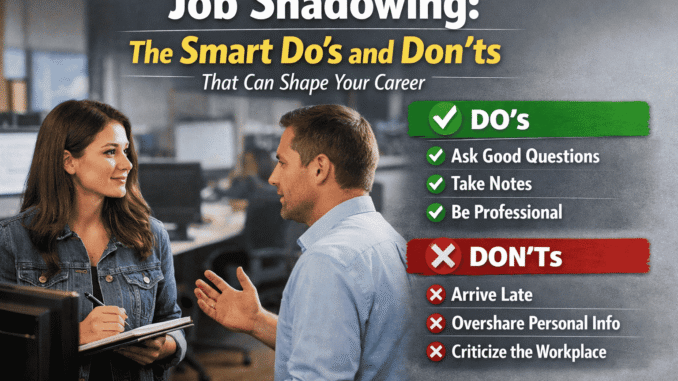
Job shadowing is one of the most underrated yet powerful career exploration tools available to students, graduates, and career switchers. Unlike internships or full-time roles, job shadowing offers short-term, real-world exposure to a profession—without long-term commitment. When done right, it can clarify career goals, build professional confidence, and open doors to mentorship and job opportunities. When done poorly, however, it can waste time or even harm your professional reputation.
This comprehensive guide explains what job shadowing really is, why it matters, and—most importantly—the smart do’s and don’ts that can genuinely shape your career trajectory.
1. What Is Job Shadowing?
Job shadowing is a career exploration experience where an individual observes a professional during their typical workday. The “shadow” follows the host employee to meetings, workstations, and daily tasks to gain firsthand insight into:
-
Job responsibilities
-
Workplace culture
-
Required skills and competencies
-
Career pathways within a field
Job shadowing is usually short-term, ranging from a few hours to several days, and is common among:
-
High school and university students
-
Recent graduates
-
Career changers
-
Professionals considering specialization or advancement
2. Why Job Shadowing Matters for Career Growth
Job shadowing goes beyond what job descriptions and online research can offer. It shows you how a job actually works in practice, not just how it looks on paper.
Key Benefits of Job Shadowing
-
Realistic career insight – Understand the daily realities of a role
-
Informed decision-making – Avoid committing to careers that don’t suit you
-
Early professional exposure – Learn workplace etiquette and expectations
-
Networking opportunities – Build relationships with industry professionals
-
Mentorship potential – Gain guidance from experienced workers
-
Resume and interview value – Demonstrates initiative and curiosity
For many people, job shadowing becomes the turning point that confirms—or completely changes—their career path.
3. Who Should Consider Job Shadowing?
Job shadowing is useful at multiple career stages:
-
Students exploring degree-related careers
-
Graduates unsure which specialization to pursue
-
Career switchers testing a new industry before retraining
-
Professionals considering leadership or technical advancement
If you’ve ever asked, “Is this career really for me?”—job shadowing is for you.
4. The Smart Do’s of Job Shadowing
Doing job shadowing “right” is what turns observation into opportunity. These best practices separate passive observers from proactive learners.
4.1 Do Set Clear Goals Before You Start
Before you shadow anyone, define what you want to learn. Ask yourself:
-
What skills am I curious about?
-
What aspects of this job do I want to understand?
-
Am I exploring this role for confirmation or elimination?
Having clear goals helps you ask better questions and stay engaged.
4.2 Do Research the Role and Organization
Never show up unprepared. Before your shadowing experience:
-
Research the company’s mission and services
-
Understand the basic responsibilities of the role
-
Familiarize yourself with industry terminology
Preparation shows professionalism and respect for your host’s time.
4.3 Do Dress Professionally (Even If Unsure)
First impressions matter. When in doubt:
-
Choose business casual or professional attire
-
Avoid flashy, overly casual, or distracting clothing
-
Match the company’s culture as closely as possible
Your appearance silently communicates seriousness and maturity.
4.4 Do Observe Actively, Not Passively
Job shadowing is not just “watching.” Practice active observation:
-
Note how professionals communicate
-
Observe problem-solving approaches
-
Pay attention to time management and workflows
Treat the experience like live career research.
4.5 Do Ask Thoughtful, Respectful Questions
Well-timed questions show curiosity and engagement. Examples include:
-
“What skills are most important in your role?”
-
“What surprised you most when you started this job?”
-
“What career paths can grow from this position?”
Avoid interrupting critical tasks—ask questions during appropriate moments.
4.6 Do Take Notes
Writing things down helps you:
-
Remember key insights
-
Reflect afterward
-
Apply lessons to career decisions
Even brief notes can be valuable long-term.
4.7 Do Express Gratitude
Always thank your host:
-
Verbally at the end of the experience
-
With a follow-up email or message
Gratitude strengthens relationships and leaves a positive impression.
4.8 Do Reflect Afterward
After job shadowing, ask yourself:
-
Did I enjoy the work environment?
-
Can I see myself doing this long-term?
-
What skills would I need to succeed here?
Reflection turns experience into clarity.
5. The Critical Don’ts of Job Shadowing
Just as important as what to do is knowing what not to do. These mistakes can limit the value of the experience—or damage your professional image.
5.1 Don’t Treat Job Shadowing Casually
Job shadowing is not a social visit or campus tour. Avoid:
-
Showing up late
-
Using your phone excessively
-
Appearing disengaged
Even unpaid experiences can influence future opportunities.
5.2 Don’t Overshare Personal Information
Professional boundaries matter. Avoid:
-
Discussing personal problems
-
Complaining about school, past jobs, or employers
-
Asking overly personal questions
Keep conversations professional and career-focused.
5.3 Don’t Assume You’ll Be Offered a Job
Job shadowing is for learning—not guaranteed employment. Acting entitled or expectant can create discomfort.
Instead:
-
Focus on learning
-
Let relationships develop naturally
Opportunities often arise after, not during, the experience.
5.4 Don’t Criticize or Judge the Workplace
Even if you notice inefficiencies or problems:
-
Keep opinions to yourself
-
Avoid comparisons to other organizations
-
Remember—you are a guest
Professionalism includes discretion.
5.5 Don’t Be Afraid to Admit Confusion
Pretending to understand everything limits learning. It’s okay to say:
-
“Could you explain that?”
-
“I’m new to this—can you clarify?”
Curiosity is respected; pretending is not.
5.6 Don’t Forget to Follow Up
Failing to follow up wastes networking potential. Always:
-
Send a thank-you email
-
Connect on LinkedIn (if appropriate)
-
Stay in touch occasionally
Job shadowing can become mentorship if nurtured properly.
6. Job Shadowing vs. Internships: What’s the Difference?
| Job Shadowing | Internship |
|---|---|
| Observation-based | Task-based |
| Short-term | Long-term |
| Low commitment | High commitment |
| Career exploration | Skill development |
| Often unpaid | Paid or unpaid |
Both are valuable—but job shadowing is ideal for early-stage exploration.
7. How Job Shadowing Can Shape Your Career Long-Term
When approached strategically, job shadowing can influence your career in powerful ways:
-
Prevents costly career mistakes
-
Clarifies education and certification needs
-
Improves career confidence
-
Builds industry awareness early
-
Creates professional advocates
Many professionals trace their career breakthroughs to a single shadowing experience that opened their eyes.
8. How to Find Job Shadowing Opportunities
If your school or employer doesn’t offer formal programs, try:
-
Reaching out to alumni
-
Networking on LinkedIn
-
Contacting professionals directly (polite emails)
-
Asking professors or career counselors
-
Attending industry events
Most professionals are open to helping—if approached respectfully.
9. Frequently Asked Questions (FAQs)
Is job shadowing only for students?
No. Career changers and professionals also benefit greatly.
How long should job shadowing last?
Anywhere from a few hours to a few days, depending on availability.
Can I include job shadowing on my CV?
Yes—especially if it’s relevant and recent.
Is job shadowing worth it if unpaid?
Absolutely. The insight gained often outweighs financial compensation.
10. Final Thoughts
Job shadowing is not just about watching someone work—it’s about learning how careers really function. By following the smart do’s and avoiding common don’ts, you turn a short experience into long-term career clarity.
In a world where career decisions are often rushed or misinformed, job shadowing offers something rare: truth before commitment.
Done right, it doesn’t just inform your next step—it can shape your entire career path.