
Introduction
In today’s rapidly growing health-conscious world, the role of physical activity in preventing disease, supporting recovery, and improving overall quality of life has become more important than ever. This Exercise Physiologist Career Guide explores how rising cases of chronic conditions such as heart disease, diabetes, obesity, hypertension, and musculoskeletal disorders have pushed healthcare systems to prioritize preventive care and rehabilitation over treatment alone.
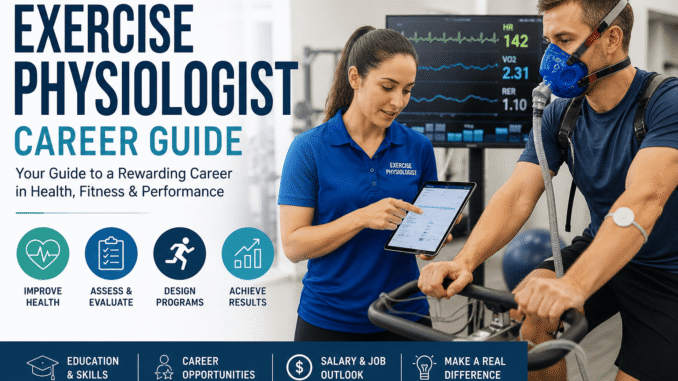
At the center of this shift is the profession of exercise physiology. The Exercise Physiologist Career Guide highlights exercise physiologists as highly trained professionals who specialize in understanding how the human body responds and adapts to physical activity. They use evidence-based knowledge to design safe, structured, and personalized exercise programs that improve health outcomes, support recovery, and enhance physical performance.
According to this Exercise Physiologist Career Guide, exercise physiologists work with a wide range of individuals, including patients recovering from surgery or injury, people managing chronic illnesses, and athletes aiming to optimize performance. Their role involves carefully assessing physical capacity, developing individualized exercise prescriptions, and continuously monitoring progress to ensure safety and effectiveness.
This Exercise Physiologist Career Guide further explains that these professionals often collaborate with doctors, physiotherapists, and other healthcare providers in clinical and rehabilitation settings. By combining medical knowledge with exercise science, they help deliver integrated care that improves long-term health and functional ability.
Overall, the Exercise Physiologist Career Guide provides a complete overview of the profession, including:
- Core duties and daily responsibilities in clinical, sports, and wellness environments
- Educational requirements, certifications, and essential professional skills
- Career pathways and specialization options such as clinical exercise physiology, sports performance, and research
- Salary expectations, job outlook, and global career opportunities
- Real-world applications in hospitals, rehabilitation centers, sports teams, and fitness industries
- Emerging trends and challenges shaping the future of the profession
In summary, the Exercise Physiologist Career Guide shows how this profession is becoming a vital part of modern healthcare systems. As the world increasingly focuses on prevention, rehabilitation, and lifestyle-based treatment, exercise physiologists are playing a key role in improving health outcomes and enhancing quality of life.
1. What Is an Exercise Physiologist?
An exercise physiologist is a healthcare professional who studies the body’s physiological responses to physical activity and applies this knowledge to improve health outcomes.
At its core, exercise physiology is the science of how exercise affects:
- The cardiovascular system (heart and blood vessels)
- The respiratory system (lungs)
- The muscular system
- The nervous system
- Metabolism and energy systems
Exercise physiologists translate this scientific knowledge into practical exercise interventions tailored to individual needs.
They commonly work with:
- Patients with chronic diseases (e.g., diabetes, heart disease)
- Individuals recovering from injury or surgery
- Athletes seeking performance enhancement
- People aiming to improve general fitness and wellness
Their primary goal is to improve physical function while minimizing health risks.
2. Core Responsibilities of an Exercise Physiologist
Exercise physiologists perform a wide range of duties that combine medical knowledge, fitness science, and patient care.
2.1 Patient Assessment and Evaluation
One of the most critical aspects of the job is evaluating a patient’s health status before designing an exercise program.
This includes:
- Reviewing medical history and records
- Conducting patient interviews
- Identifying risk factors (e.g., cardiovascular issues)
- Understanding lifestyle habits
They assess baseline fitness using tests such as:
- Cardiovascular endurance tests
- Strength and flexibility assessments
- Body composition analysis
These evaluations help determine safe and effective exercise strategies.
2.2 Conducting Physical and Clinical Tests
Exercise physiologists use specialized equipment to measure physiological responses during exercise.
Common measurements include:
- Heart rate
- Blood pressure
- Oxygen consumption
- Breathing rate
- Electrocardiogram (ECG/EKG) readings
These tests help identify how the body reacts under stress and guide program design.
2.3 Designing Personalized Exercise Programs
Based on assessment results, exercise physiologists develop customized exercise plans tailored to:
- Patient health conditions
- Fitness levels
- Rehabilitation goals
- Lifestyle constraints
Programs may include:
- Aerobic exercises (e.g., walking, cycling)
- Strength training
- Flexibility exercises
- Balance and coordination activities
The goal is to improve:
- Cardiovascular health
- Muscular strength
- Mobility and flexibility
- Overall physical function
2.4 Monitoring and Supervising Exercise Sessions
Safety is a top priority. Exercise physiologists monitor patients during exercise to ensure proper form and prevent complications.
They observe:
- Vital signs
- Signs of fatigue or distress
- Exercise technique
If necessary, they modify programs in real time to ensure patient safety.
2.5 Patient Education and Lifestyle Coaching
Exercise physiologists also act as educators and motivators.
They teach patients:
- Proper exercise techniques
- Injury prevention strategies
- Lifestyle modifications (diet, activity levels)
- Long-term health management strategies
Education is essential for empowering patients to maintain healthy habits.
2.6 Tracking Progress and Adjusting Plans
Over time, exercise physiologists:
- Monitor improvements
- Evaluate progress toward goals
- Adjust exercise programs accordingly
This ensures continuous improvement and prevents plateaus.
2.7 Record Keeping and Documentation
Accurate documentation is essential in healthcare settings.
Exercise physiologists maintain records of:
- Patient assessments
- Test results
- Exercise prescriptions
- Progress reports
This supports continuity of care and collaboration with other healthcare professionals.
3. Work Environments and Settings
Exercise physiologists work in a variety of environments, including:
3.1 Hospitals and Clinics
Many work in healthcare facilities, assisting patients with chronic conditions such as:
- Heart disease
- Pulmonary disorders
- Diabetes
They often collaborate with doctors, nurses, and physical therapists.
3.2 Rehabilitation Centers
They play a key role in:
- Cardiac rehabilitation
- Post-surgical recovery
- Injury rehabilitation
3.3 Fitness and Wellness Centers
Some work in gyms or wellness programs, focusing on:
- Preventive health
- General fitness
- Lifestyle improvement
3.4 Sports Organizations
Exercise physiologists may work with athletes to:
- Enhance performance
- Prevent injuries
- Optimize training programs
3.5 Research and Academia
Some professionals engage in research, studying:
- Exercise effects on diseases
- Performance optimization
- Human physiology
4. Types of Exercise Physiologists (Exercise Physiologist Career Guide)
The field of exercise physiology is broad and offers several career pathways depending on whether professionals focus on clinical care, research, sports performance, or rehabilitation. In this Exercise Physiologist Career Guide, we explore the main types of exercise physiologists and their key roles in health and fitness.
4.1 Clinical Exercise Physiologists
Clinical exercise physiologists work primarily in hospitals, rehabilitation centers, and other healthcare settings. They design and supervise safe exercise programs for patients with chronic or complex medical conditions such as heart disease, diabetes, obesity, and respiratory disorders. Their goal is to improve patients’ physical function, manage symptoms, and support recovery through scientifically structured exercise interventions. They often collaborate closely with doctors, nurses, and physiotherapists to ensure patient safety and effective treatment outcomes.
4.2 Applied Exercise Physiologists
Applied exercise physiologists focus on translating scientific research into practical health solutions. They may work in universities, research institutions, public health organizations, or wellness programs. Their work involves studying how the body responds to physical activity and using that knowledge to develop improved exercise guidelines, prevention strategies, and fitness programs. This role is essential in bridging the gap between laboratory findings and real-world health improvements.
4.3 Sports Exercise Physiologists
Sports exercise physiologists specialize in optimizing athletic performance. They work with athletes, sports teams, and fitness professionals to enhance strength, endurance, speed, and recovery. Their responsibilities include designing training programs, analyzing performance data, and reducing the risk of sports injuries. They also help athletes improve energy efficiency and achieve peak performance during competitions.
4.4 Kinesiotherapists
Kinesiotherapists focus on therapeutic and rehabilitative exercise designed to restore movement and physical function. They work with individuals recovering from injuries, surgeries, or neurological conditions that affect mobility. By using targeted movement therapy and exercise routines, they help patients regain strength, flexibility, balance, and coordination. Their role is especially important in long-term rehabilitation and functional recovery.
Overall, these specializations highlight how diverse and impactful the field can be, offering multiple career paths depending on individual interests and professional goals.
5. Essential Skills and Qualities
To succeed, exercise physiologists need a combination of technical and interpersonal skills.
5.1 Scientific Knowledge
Strong understanding of:
- Anatomy
- Physiology
- Kinesiology
- Nutrition
5.2 Analytical Skills
Ability to:
- Interpret test results
- Assess patient needs
- Develop effective programs
5.3 Communication Skills
They must clearly explain:
- Exercise instructions
- Health recommendations
- Safety precautions
5.4 Compassion and Empathy
Many patients are dealing with pain or chronic illness, requiring emotional support.
5.5 Attention to Detail
Accurate monitoring and documentation are essential for patient safety.
5.6 Problem-Solving Skills
They must adapt programs based on patient progress and limitations.
6. Education and Training Requirements
6.1 Bachelor’s Degree
A minimum of a bachelor’s degree in:
- Exercise physiology
- Exercise science
- Kinesiology
- Related health field
is typically required.
6.2 Coursework
Programs usually include:
- Anatomy and physiology
- Biomechanics
- Nutrition
- Exercise testing and prescription
6.3 Internships and Practical Experience
Hands-on experience is crucial and often gained through:
- Clinical placements
- Internships
6.4 Certifications
Certifications enhance job prospects, including:
- ACSM (American College of Sports Medicine)
- ASEP (American Society of Exercise Physiologists)
- Basic Life Support (BLS)
7. Career Path and Advancement
Exercise physiologists can advance their careers through:
7.1 Specialization
- Cardiac rehabilitation
- Pulmonary rehabilitation
- Sports performance
7.2 Advanced Degrees
- Master’s degree
- Doctorate (PhD)
7.3 Leadership Roles
- Program director
- Clinical supervisor
7.4 Transition Careers
Some move into:
- Physical therapy
- Occupational therapy
- Healthcare administration
8. Salary and Job Outlook
8.1 Salary Expectations
- Average salary: ~$49,798/year (Indeed data)
- Median salary: ~$58,160/year (BLS)
Salaries vary based on:
- Experience
- Education
- Location
- Certifications
8.2 Job Growth
The profession is expected to grow by 9% from 2024 to 2034, faster than average.
Growth is driven by:
- Increased focus on preventive healthcare
- Aging populations
- Rising chronic disease rates
9. Difference Between Related Careers
9.1 Exercise Physiologist vs Physical Therapist
- Exercise physiologist: Focuses on exercise programs
- Physical therapist: Focuses on rehabilitation and recovery techniques
9.2 Exercise Physiologist vs Personal Trainer
- Exercise physiologist: Medical background
- Personal trainer: General fitness focus
9.3 Exercise Physiologist vs Athletic Trainer
- Athletic trainer: Focuses on sports injuries
- Exercise physiologist: Works with broader populations
10. Real-World Impact of Exercise Physiologists
Exercise physiologists play a vital role in improving lives.
10.1 Chronic Disease Management
They help manage conditions such as:
- Heart disease
- Diabetes
- Obesity
10.2 Rehabilitation
They assist patients recovering from:
- Surgery
- Injuries
- Medical conditions
10.3 Preventive Healthcare
They promote healthy lifestyles to prevent diseases.
10.4 Mental Health Benefits
Exercise programs can:
- Reduce stress
- Improve mood
- Enhance overall well-being
11. Challenges in the Profession
Despite its benefits, the profession has challenges:
- Limited job availability in some regions
- Need for continuous education
- Emotional demands of patient care
- Physical demands of the job
12. Future Trends in Exercise Physiology
The field is evolving rapidly with advancements such as:
12.1 Technology Integration
- Wearable fitness trackers
- Remote monitoring tools
12.2 Personalized Medicine
Exercise programs tailored to genetic profiles
12.3 Telehealth Services
Virtual consultations and remote coaching
12.4 Preventive Healthcare Expansion
Greater emphasis on lifestyle-based treatment
13. How to Become an Exercise Physiologist (Step-by-Step)
- Earn a bachelor’s degree
- Gain practical experience
- Obtain certifications
- Apply for entry-level roles
- Pursue advanced education if needed
Conclusion
Exercise physiologists are at the forefront of modern healthcare, bridging the gap between medicine and fitness. By combining scientific knowledge with practical application, they help individuals improve their health, recover from illness, and achieve their physical potential.
As healthcare continues to shift toward prevention and holistic well-being, the demand for exercise physiologists is expected to grow. For individuals passionate about science, health, and helping others, this career offers both meaningful impact and professional fulfillment.
Leave a Reply