
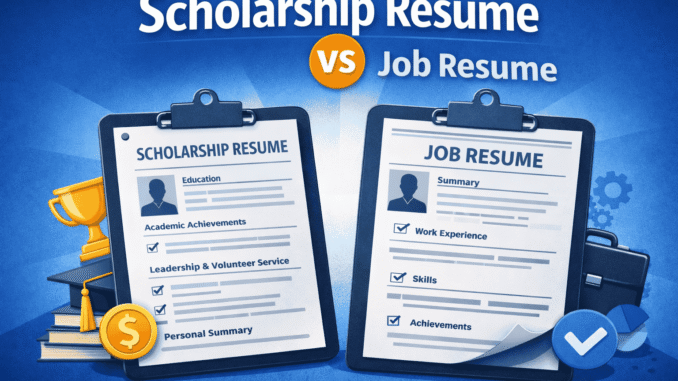
Creating a resume can feel overwhelming — especially when you’re unsure whether you need one for academic funding or employment. Although they may appear similar on the surface, Scholarship Resume vs Job Resume requirements differ significantly in purpose, audience, and evaluation criteria. Understanding these differences is crucial if you want to present your achievements, skills, and potential in the most effective way.
In this comprehensive guide, we break down the essential Scholarship Resume vs Job Resume distinctions, explain why they matter to reviewers and employers, and share practical strategies for tailoring each resume for success. You’ll also learn how tools like My CV Creator can help you create polished, professional resumes that meet both scholarship and job application standards.
Why Understanding the Difference Matters
One of the most common mistakes students and job seekers make is using the same resume for both scholarship and job applications. This Scholarship Resume vs Job Resume mix-up often leads to weak submissions, missed opportunities, and qualified candidates being overlooked. Scholarship committees and hiring managers evaluate applications differently, and each audience looks for specific indicators of value and potential.
A scholarship resume is designed to tell a story of academic promise, purpose, and long-term impact, while a job resume highlights skills, measurable results, and professional performance. Understanding the Scholarship Resume vs Job Resume distinction allows you to tailor your content, formatting, and tone appropriately—ensuring your achievements stand out in the right context and significantly improving your chances of success.
🧠 What Is a Scholarship Resume?
A scholarship resume is a document that highlights your academic achievements, leadership experiences, community involvement, personal goals, and potential contribution. It explains why you are worthy of investment (financial support) and how the scholarship will help you achieve your long-term goals.
Key Focus of Scholarship Resumes:
-
Academic excellence and intellectual curiosity
-
Leadership and initiative
-
Community service and impact
-
Personal motivations and ambitions
-
Alignment with the scholarship’s mission
Scholarship judges are not just funding performance — they are investing in promise and purpose.
Example elements commonly emphasized:
-
Honors and Awards
-
Research or academic projects
-
Volunteer work and community leadership
-
Personal statement or objective tied to scholarship goals
🧠 What Is a Job Resume?
A job resume is a professional document designed to demonstrate how your skills, experience, and achievements make you a strong fit for a specific job role. Employers use this resume to determine if you have the capability to perform the tasks required by the job.
Key Focus of Job Resumes:
-
Relevant work experience
-
Achievements and measurable results
-
Professional skills and certifications
-
Business or industry impact
-
Alignment with job description and company needs
Hiring managers want to know:
Can you do the job well? and how have you demonstrated it before?
📌 Core Differences Between Scholarship and Job Resumes
Let’s explore the essential distinctions you must know:
1. Purpose of the Resume
| Scholarship Resume | Job Resume |
|---|---|
| To secure financial aid and demonstrate potential | To secure employment and highlight ability |
| Shows your future promise and alignment with a mission | Shows your ability to perform specific job tasks |
| Emphasizes academics, goals, and impact | Emphasizes performance, outcomes, and skills |
Scholarship resumes answer: Why should we invest in you?
Job resumes answer: Why should we hire you?
2. Audience Expectations
Scholarship Reviewers
-
Look for academic promise, leadership, community service, and personal values
-
Want to see story + alignment with the scholarship mission
-
Seek future potential and character
Hiring Managers
-
Look for proof you can perform a role immediately
-
Focus on achievements, quantifiable results, and job-specific skills
-
Expect professional experience and measurable impact
3. Structure and Sections
While there is overlap, the typical sections differ:
Scholarship Resume Example Sections:
-
Objective or Personal Summary
-
Education & Academic Honors
-
Research or Academic Projects
-
Leadership & Extracurricular Activities
-
Community Service / Volunteer Work
-
Personal Statement (optional)
-
Awards & Recognition
Job Resume Example Sections:
-
Professional Summary or Profile
-
Work Experience
-
Skills (Technical & Soft Skills)
-
Achievements & Metrics
-
Certifications & Training
-
Professional Affiliations
4. Tone and Language
-
Scholarship Resume: Inspirational, future-focused, and values-driven
Example: “Aspiring environmental scientist dedicated to expanding clean energy access.” -
Job Resume: Results-focused, concise, with business or technical language
Example: “Managed a team of 10 and increased sales by 20% in Q2 2025.”
Scholarship resumes often include narrative elements that convey your motivations, values, and long-term goals — a style that would feel out of place in most job resumes.
5. Metrics and Achievements
Both resumes benefit from quantification, but in different contexts:
Scholarship Resume Metrics:
-
GPA, awards received, leadership roles held
-
Number of volunteer hours
-
Impact on school/community initiatives
Job Resume Metrics:
-
Revenue growth, cost savings, efficiency improvements
-
Sales numbers, project deliverables, performance targets
-
Team sizes managed
Example Comparison:
-
Scholarship: Tutored 40+ students over two years; 90% achieved grade improvement
-
Job: Trained 40+ sales associates, improving quarterly sales by 18%
6. Personal Statements vs Professional Summaries
Scholarship Resume:
-
Often includes a personal summary that communicates goals and values
-
Can include a short narrative about your academic journey
Job Resume:
-
Uses a professional summary or profile emphasizing experience and fit
-
Focuses on skills and achievements relevant to the role
🎯 How to Tailor Each Resume for Maximum Impact
Scholarship Resume Tips
✔ Highlight academic excellence with evidence
✔ Showcase leadership and service with clear impact
✔ Quantify community involvement
✔ Align personal goals with scholarship purpose
✔ Use tools like My CV Creator to build structured templates
Job Resume Tips
✔ Customize for each job description
✔ Use strong action verbs and quantifiable results
✔ Focus on achievements, not duties
✔ Include relevant skills and certifications
✔ Ensure formatting is clean and professional
📌 When You Might Need Both
Many students and recent graduates apply for internships, research positions, or scholarships simultaneously. In these cases, it’s critical to know how to adapt the same core experiences to fit each context — without copying the exact same resume.
For example:
-
An internship application resume may blend elements of both scholarship and job resumes.
-
A research fellowship might require academic focus but also professional presentation.
Tip: Maintain a master document of your achievements, then tailor separate versions for each opportunity.
💡 How My CV Creator Helps You Build Both Types of Resumes
Creating scholarship and job resumes manually can be time-consuming and error-prone — especially if you’re unfamiliar with the expectations of each audience.
This is where My CV Creator can be a game changer. It provides:
✅ Professionally designed resume templates for scholarships and jobs
✅ Guidance on what to include in each section
✅ Customizable layouts that suit your goals
✅ Pre-written bullet points and objective examples
✅ Easy formatting and export options
Whether you’re:
-
Applying for a competitive scholarship
-
Entering the job market
-
Seeking internships or research positions
My CV Creator helps you present your best self with confidence and clarity.
📌 Final Summary of Key Differences
| Aspect | Scholarship Resume | Job Resume |
|---|---|---|
| Primary Goal | Secure funding | Secure employment |
| Focus | Potential & impact | Skills & performance |
| Tone | Story-driven, values-focused | Results-driven, professional |
| Key Sections | Academic honors, volunteer work | Work experience, skills |
| Best For | Scholarships, fellowships | Jobs, internships |
Conclusion
Understanding the differences between a scholarship resume and a job resume is essential for success in both academic and professional pursuits. While they share some traits, the purpose, audience, structure, and presentation differ significantly.
By learning these distinctions and using the right tools — like My CV Creator — you can create resumes that are not only well-written and visually appealing but also strategically tailored to achieve your goals.
Whether you’re aiming for funding, employment, internships, or research roles, the right resume can open doors — and knowing which type to use is the first step toward getting there.
Leave a Reply