
Lack of experience is one of the most common—and most misunderstood—barriers in the job search. You scroll through job listings, feel confident about your skills, then hit the same discouraging line over and over again: “2–5 years of experience required.”
If you’re a recent graduate, career switcher, self-taught professional, or someone re-entering the workforce, it can feel like a dead end. How are you supposed to get experience if every job requires experience?
The truth is this: experience is broader than you think, and employers are often more flexible than job descriptions suggest. Many candidates lose out not because they lack experience, but because they don’t know how to present what they already have—or how to strategically close the gap.
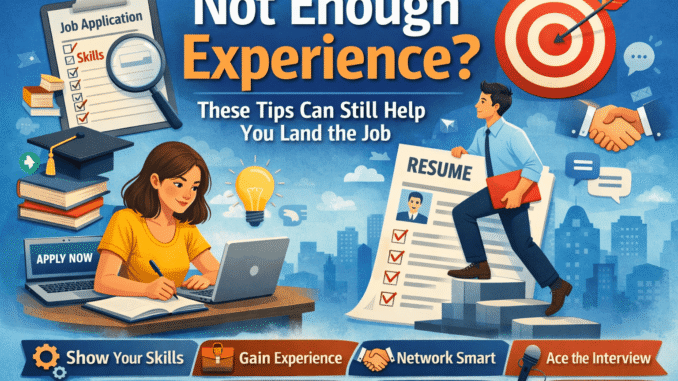
This article breaks down proven, practical strategies to help you land a job even when your experience feels “not enough.”
1. Redefine What “Experience” Really Means
One of the biggest mistakes job seekers make is assuming experience only comes from full-time, paid roles. Employers, however, increasingly recognize non-traditional experience, especially in fast-changing industries.
Experience can include:
-
Internships (paid or unpaid)
-
Freelance or contract work
-
Volunteer roles
-
Academic projects
-
Personal or passion projects
-
Online courses with hands-on assignments
-
Student leadership or campus activities
-
Family business involvement
-
Self-initiated work (blogs, apps, research, design portfolios)
Action tip:
List everything you’ve done that involved problem-solving, teamwork, communication, leadership, or technical skills. You’ll be surprised how much “experience” you already have.
2. Focus on Skills, Not Job Titles
Hiring managers care less about where you worked and more about what you can do.
Instead of thinking:
“I’ve never had this job before.”
Reframe it as:
“Which skills does this job require, and where have I already used them?”
For example:
-
A customer service role builds communication, conflict resolution, and empathy.
-
A school project builds research, analysis, and presentation skills.
-
Managing a student group builds leadership, budgeting, and coordination skills.
Action tip:
Carefully analyze the job description and highlight the required skills. Then match each one to something you’ve already done—no matter how small it seems.
3. Tailor Your CV for Potential, Not History
When you lack extensive experience, a generic CV will hurt you. A targeted CV can level the playing field.
How to optimize your CV:
-
Use a skills-based or hybrid CV format
-
Place your skills and achievements above work history
-
Quantify results wherever possible
(e.g., “Managed a team of 5,” “Increased engagement by 30%,” “Completed 10+ projects”) -
Remove irrelevant experience that distracts from your strengths
Instead of listing duties, emphasize outcomes.
Weak:
Assisted in social media management.
Strong:
Created and scheduled content that increased Instagram engagement by 40% in three months.
4. Build Experience While You Apply
You don’t have to wait for a job to gain experience. Many successful candidates build experience alongside their job search.
Ways to do this:
-
Volunteer with NGOs, startups, or community organizations
-
Freelance on platforms like Upwork, Fiverr, or locally
-
Offer your skills to small businesses or professionals
-
Join open-source or collaborative projects
-
Create your own projects (blogs, portfolios, apps, case studies)
-
Take short, practical online courses with real-world tasks
Employers value initiative. Showing that you didn’t sit idle while waiting for an opportunity speaks volumes.
5. Use Your Cover Letter to Tell the Story Your CV Can’t
Your CV shows what you’ve done. Your cover letter explains why it matters. Mycvcreator.com
If you lack experience, your cover letter is your secret weapon.
What to emphasize:
-
Your motivation and interest in the role
-
Your transferable skills
-
How quickly you learn and adapt
-
Your willingness to grow and add value
-
Specific reasons you’re a strong fit despite limited experience
Action tip:
Avoid apologizing for your lack of experience. Instead, confidently explain how your background prepares you for the role in a different—but valuable—way.
6. Network Strategically (Even If You’re Introverted)
Many jobs are filled before they’re ever advertised. Networking isn’t about begging for jobs—it’s about building relationships.
Practical networking strategies:
-
Connect with professionals on LinkedIn in your field
-
Attend career fairs, webinars, workshops, or alumni events
-
Reach out for informational interviews
-
Join professional groups or online communities
-
Engage with industry content and discussions
A simple message like:
“I admire your career path and would love to learn how you got started.”
can open doors you didn’t know existed.
7. Apply Even If You Don’t Meet Every Requirement
Job descriptions often describe an ideal candidate, not a mandatory checklist.
If you meet:
-
About 60–70% of the requirements
-
Most of the core skills
-
The attitude and willingness to learn
You should apply.
Many employers prioritize:
-
Trainability
-
Cultural fit
-
Problem-solving ability
-
Communication skills
-
Work ethic
Overconfidence keeps some candidates from applying. Don’t let self-doubt do the same to you.
8. Prepare to Prove Yourself in Interviews
When experience is limited, interviews become your opportunity to shine.
How to stand out:
-
Prepare strong examples using the STAR method (Situation, Task, Action, Result)
-
Show enthusiasm and curiosity
-
Demonstrate how you solve problems
-
Ask thoughtful questions
-
Be honest, but confident, about what you’re learning
Employers often hire people they believe will grow into the role, not just fill it on day one.
9. Build a Strong Online Presence
In today’s job market, your online presence can act as proof of competence.
Consider:
-
Optimizing your LinkedIn profile
-
Sharing insights or learning journeys
-
Publishing articles or posts in your field
-
Creating a portfolio website or GitHub repository
-
Documenting projects and achievements
When employers Google your name, let them find evidence of passion, learning, and initiative.
10. Adopt the Right Mindset: Experience Is Built, Not Given
Rejection is part of the process—not a verdict on your potential.
Every:
-
Application improves your strategy
-
Interview builds confidence
-
Project adds experience
-
Connection expands your reach
Most professionals you admire once stood exactly where you are now.
The difference is persistence.
Final Thoughts
Not having enough experience doesn’t mean you’re not qualified—it means you’re at the beginning of your professional story.
By:
-
Redefining experience
-
Highlighting transferable skills
-
Building practical exposure
-
Networking intentionally
-
Applying confidently
you can position yourself as a high-potential candidate, not an underqualified one.
Remember:
Everyone starts somewhere. The key is starting smart—and not giving up too soon.